


Caring for contact lenses is crucial for maintaining eye health and vision. With the widespread use of contact lenses for both medical and cosmetic purposes, the need to understand how to care for them properly to keep them clean and prevent potential health problems is increasing. In this article, we will discuss the various aspects of contact lens care, answering important questions related to cleaning, storage, and choosing the right solutions.
The importance of contact lens care
Proper contact lens care is essential for maintaining eye health and preventing infections. When lenses are left without proper cleaning or used incorrectly, the eyes may be susceptible to problems such as bacterial or fungal infections, or allergies.
Key benefits of contact lens care:
- Preventing infection: Unclean lenses can be an ideal environment for the growth of germs and bacteria that cause corneal inflammation.
- Keeping lenses moist: Clean lenses reduce irritation and keep the eyes moist.
- Protection from eye allergies: Dirty lenses or contaminated solution may cause an allergic reaction in the eye, leading to redness and swelling.
- Extending lens life: By regularly cleaning and disinfecting lenses, lenses can be used for longer periods of time.
Types of contact lenses and their effect on how to care for them
Contact lenses are available in different types, each with its own specific care requirements. Some of the most important types include:
Daily contact lenses:
- Designed for single daily use and then disposal.
- They are considered the easiest to care for as they do not require cleaning or storage.
Weekly lenses:
- Replace once a week.
- It requires daily cleaning and disinfection.
Monthly lenses:
- It is used for a period of one month and requires daily cleaning.
- They need to be stored in a suitable solution to keep them clean and prevent drying out, in addition to cleaning the lens case periodically.
How to clean contact lenses properly
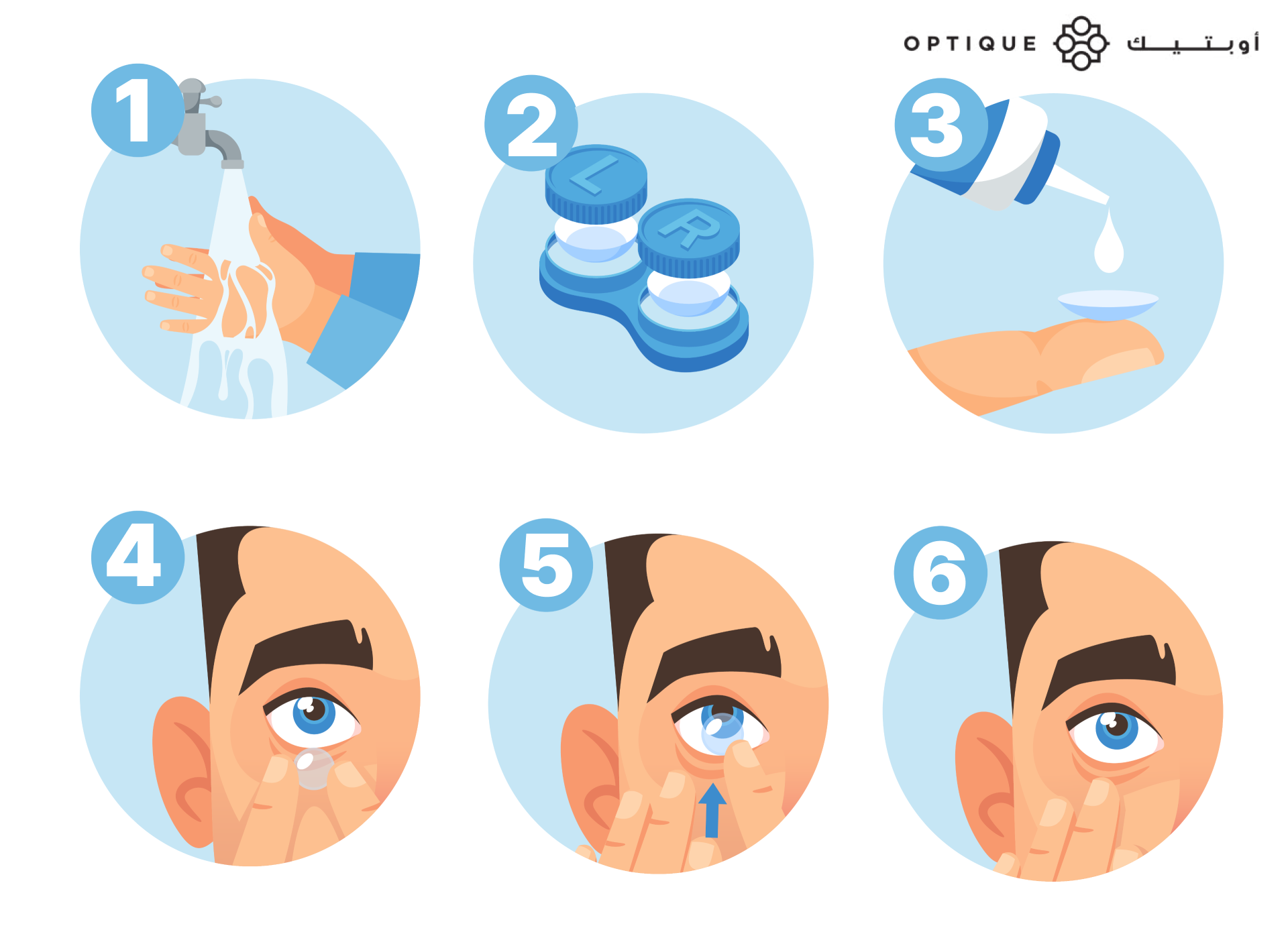
Properly cleaning your lenses is essential for ensuring eye health. Here's a detailed guide to cleaning your lenses:
1. Wash your hands thoroughly:
Before touching the lenses, wash your hands with warm water using fragrance-free soap and dry them with a lint-free towel.
2. Use the appropriate solution:
Place the lens in the palm of your hand and add a few drops of the recommended solution.
3. Gently rub the lens:
Use your finger to gently rub the lens for 10-20 seconds to remove impurities and bacteria.
4. Rinse the lens with the solution:
Wash the lens again with the appropriate solution to ensure that any remaining deposits are removed.
5. Store the lens correctly:
Place each lens in a separate compartment in the storage case, then fill the case with fresh lens solution and do not place it on top of the old one.
alert:
Do not use water or saliva to clean the lenses, as they may contain contaminants that cause infection.
The correct way to clean a lens case
Properly cleaning your lens case is an integral part of your contact lens care routine. Neglecting this simple step can lead to eye health problems.
Steps:
- Empty the can: Empty the can completely of the old solution.
- Rinse the case: Rinse the case thoroughly with lens solution. Make sure to rinse all corners and crevices.
- Manual cleaning: Use your clean finger to rub the inside of the can to ensure any residue is removed.
- Second rinse: Rinse the can again with the solution to get rid of any residue of the old solution.
- Drying: Leave the can open and upside down on a clean towel to air dry completely. Do not wipe it with a towel or cloth .
- Periodic case change: Replace the lens case every 3 months or according to the manufacturer's recommendations.
Different types of solutions and how to use them correctly
There are many types of solutions used for contact lens care, and each type has its own uses and benefits.
Multipurpose solutions:
- Used for cleaning, rinsing, and storage.
- Suitable for most types of lenses.
Saline solution:
- Saline solution is used to rinse the lenses after they have been cleaned with a solution designed to remove any residue from the cleaning solution.
- Not a substitute for sterilization Saline solution does not kill bacteria or fungi, and therefore cannot be relied upon to sterilize lenses.
Solutions for rigid and soft lenses:
- The composition of solutions used for rigid and soft contact lenses differs. Rigid lens solutions are often more concentrated and stronger than soft lens solutions because rigid lenses are less porous and require more thorough cleaning.
How to choose the right solution?
- Consult an ophthalmologist to determine the most suitable solution based on the type of lenses and eye sensitivity.
- Make sure to read the usage instructions on the package.
Additional tips for contact lens care
- Avoid wearing contact lenses while sleeping:
Even lenses designed for sleeping may increase the risk of eye infections.
- Do not share your lenses with others:
- Your contact lenses are made to fit the unique curvature and visual acuity of your eye. Sharing them can lead to infection or eye strain. Additionally, when contact lenses are shared, bacteria and fungi can be transferred from one eye to the other.
Visit your eye doctor regularly to ensure eye health and lens compatibility.
- Replace the lenses on time:
Do not use the lenses for longer than recommended.
Check out the best deals on medical lenses from Optic:
20% discount on Proclear lenses (30 lenses)
Lens + Lens on Desi monthly lenses
28% discount on Acuvue Oasis lenses - 6 lenses